

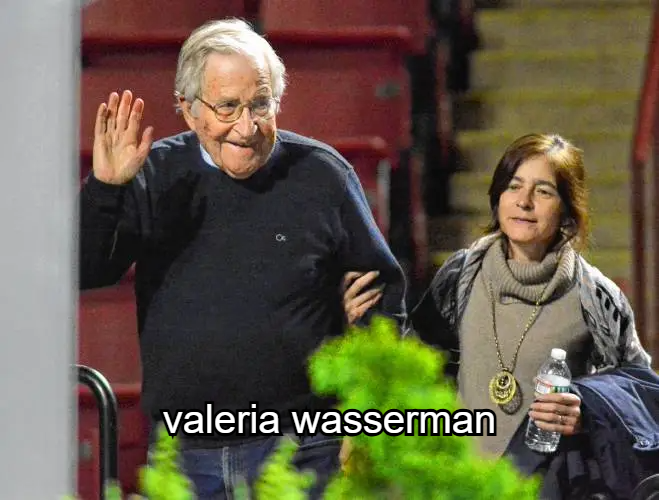
Valeria Wasserman is best known to many people as the wife of celebrated linguist and political thinker Noam Chomsky, but her own professional accomplishments deserve equal attention. A skilled translator with a multicultural background, she has built a career centered on language, communication, and international understanding.
Unlike many individuals connected to world-famous intellectuals, Valeria has deliberately maintained a low public profile. She rarely appears in interviews, avoids unnecessary media attention, and focuses primarily on her work and personal life. That privacy has naturally sparked curiosity among people who want to learn more about her journey.
This article explores Valeria Wasserman’s background, professional life, relationship with Noam Chomsky, and the reasons why she continues to attract public interest despite remaining largely out of the spotlight.
Early Life and Cultural Background
Valeria Wasserman was born and raised in Brazil, a country celebrated for its cultural diversity and rich linguistic heritage. Growing up in such an environment likely helped shape her appreciation for language and communication from an early age. Although specific details about her childhood remain private, her later professional choices suggest a deep interest in multicultural understanding.
Brazil itself is a unique place where influences from Europe, Africa, Indigenous communities, and other regions blend together. Living in this environment often encourages people to develop broader perspectives on culture and identity. For someone who eventually pursued a career in translation, such exposure can be extremely valuable.
Another notable aspect of Valeria’s early life is the level of privacy she has maintained. Unlike public personalities who openly discuss every chapter of their upbringing, she has chosen to keep most personal details away from media attention. That decision reflects a consistent preference for letting her professional work speak for itself rather than seeking public recognition.
Educational Foundation and Interest in Languages

Education is an essential part of any successful career in translation, and Valeria Wasserman appears to have developed a strong academic foundation that supported her professional growth. Language specialists require more than simple bilingual abilities; they need cultural awareness, analytical skills, and a deep understanding of context.
Translation is one of the most intellectually demanding professions because it involves preserving meaning rather than merely converting words. A translator must understand the intentions behind a message while ensuring that it resonates naturally in another language. This process demands patience, expertise, and continuous learning.
Valeria’s career suggests that she possesses these qualities. Her ability to work within professional translation environments indicates years of preparation and dedication. Such expertise often remains invisible to the public, but it plays an essential role in facilitating international communication across numerous industries and institutions.
Building a Professional Career as a Translator
Long before becoming widely recognized through her marriage, Valeria Wasserman established herself as a professional translator. Translation professionals act as cultural bridges, helping individuals and organizations communicate effectively across linguistic boundaries. Their work contributes to business, education, diplomacy, publishing, and many other fields.
The profession requires remarkable precision because even minor errors can alter meanings significantly. Skilled translators must balance literal accuracy with cultural sensitivity, ensuring that ideas remain authentic in different languages. This balance represents one of the most challenging aspects of the work and separates experienced professionals from beginners.
Valeria’s dedication to her profession reflects a broader commitment to international understanding. In an increasingly globalized world, translators play a critical role in connecting communities and promoting collaboration. Her career serves as an example of how specialized expertise can create meaningful contributions without attracting constant public attention.
Many people associated with famous figures eventually pursue media opportunities or public platforms. Valeria, however, appears to have remained focused on her professional identity. This independence adds another layer of respect to her accomplishments and highlights the value of building a career based on personal skills and knowledge.
Marriage to Noam Chomsky
The public became more familiar with Valeria Wasserman after her marriage to Noam Chomsky in 2014. Chomsky, known worldwide for his groundbreaking work in linguistics and his extensive political commentary, had previously been married to Carol Chomsky for nearly six decades before her passing in 2008.
Their marriage attracted international attention because of Chomsky’s influence in academic and intellectual circles. Yet despite this interest, the couple maintained a remarkably private relationship. They avoided turning their personal lives into public narratives and instead focused on their shared interests and family connections.
One interesting aspect of their partnership is their mutual connection to language. Chomsky revolutionized modern linguistics through his theories of generative grammar, while Valeria built her career around translation and communication. Although their professional paths differ, both revolve around the power and complexity of human language.
Their relationship demonstrates that intellectual compatibility and mutual respect can form strong foundations for lasting companionship. Rather than seeking media exposure, they have emphasized personal values and private life, a choice that many observers find refreshing in today’s highly public culture.
Shared Interests in Language and Communication
Language is a central theme in both Valeria Wasserman’s professional life and Noam Chomsky’s academic legacy. While one approaches language through practical translation work and the other through theoretical research, both fields rely on a profound understanding of communication.
Translators serve as intermediaries between cultures, ensuring that ideas retain their original meaning while adapting naturally to different audiences. This responsibility requires empathy, attention to detail, and an appreciation for cultural diversity. Valeria’s career embodies these principles through her work in multilingual communication.
Chomsky’s contributions, meanwhile, transformed how scholars understand language acquisition and cognitive processes. Although their professional activities differ significantly, Valeria Wasserman highlight the importance of language as a fundamental aspect of human experience. Their shared appreciation for communication likely strengthens their personal connection.
The overlap between practical and theoretical language work also reflects broader themes in globalization. Effective communication remains one of humanity’s most valuable tools, and professionals who contribute to that process continue to play essential roles in modern society.
Maintaining Privacy in a Public World
One of the most distinctive characteristics of Valeria Wasserman is her commitment to privacy. In an era where public visibility often seems inseparable from influence, she has consistently chosen to maintain personal boundaries and avoid unnecessary attention.
This approach offers several advantages. Privacy allows individuals to focus on relationships, careers, and intellectual pursuits without constant external pressure. It also protects family life from the distractions and complications that frequently accompany public exposure. For someone connected to a globally recognized thinker, these boundaries are especially meaningful.
Her private lifestyle challenges contemporary assumptions about success and relevance. Modern culture often rewards self-promotion and digital Valeria Wasserman, yet Valeria demonstrates that professional achievement does not depend on social media fame or public recognition. Her work as a translator speaks for itself without requiring a personal brand built around publicity.
Many people admire this approach because it reflects authenticity and confidence. Choosing privacy in a highly connected world is not always easy, but it can provide a healthier balance between public responsibilities and personal well-being.
Public Interest and Growing Curiosity
Interest in Valeria Wasserman continues to grow, largely because of her connection to Noam Chomsky and her own professional background. People naturally want to understand the lives of those who share close relationships with influential public figures, especially when those individuals maintain a degree of mystery.
The limited information available about her has contributed to that curiosity. Since she rarely participates in media interviews or public discussions, audiences often focus on verified facts rather than speculation. This dynamic creates a more respectful form of public interest centered on genuine accomplishments rather than sensational stories.
Her career as a translator also appeals to people who appreciate intellectual professions that operate behind the scenes. Translators rarely receive widespread recognition despite their essential contributions to global communication. Learning about someone who has built a successful career in this field can be both informative and inspiring.
Ultimately, the fascination surrounding Valeria Wasserman stems from a combination of professional achievement, personal privacy, and association with one of the world’s most influential intellectuals. These elements together create a compelling but grounded public image.
Valeria Wasserman’s Legacy and Influence
Although Valeria Wasserman is not a traditional public figure, her life reflects values that many people continue to admire. Professional excellence, cultural understanding, and personal integrity remain important qualities in every generation, and her experiences highlight the importance of each.
Her work in translation demonstrates how language professionals contribute to international cooperation and mutual understanding. By helping people communicate across cultural boundaries, translators make valuable contributions that extend far beyond individual projects. Their efforts strengthen connections between communities and support global collaboration.
Her commitment to privacy also offers an important lesson in maintaining balance. Not every meaningful life requires constant visibility or public validation. Sometimes, the most significant achievements occur quietly through dedicated work, strong relationships, and personal authenticity.
As interest in her story continues, Valeria Wasserman remains an example of how professional accomplishment and private values can coexist successfully. Her journey reminds us that influence is not always measured by fame but often by the quality of one’s work and the principles one chooses to uphold.
Conclusion
Valeria Wasserman represents much more than her public association with Noam Chomsky. She is an accomplished translator, a multilingual professional, and a person who values privacy and intellectual engagement. Her career highlights the importance of effective communication in an increasingly interconnected world.
Her marriage to one of history’s most influential linguists has naturally attracted attention, yet she has maintained her own identity and professional focus. Rather than seeking publicity, she has chosen a path defined by expertise, discretion, and meaningful contributions within her field.
Also Read: Natalie Viscuso Age